The Challenge
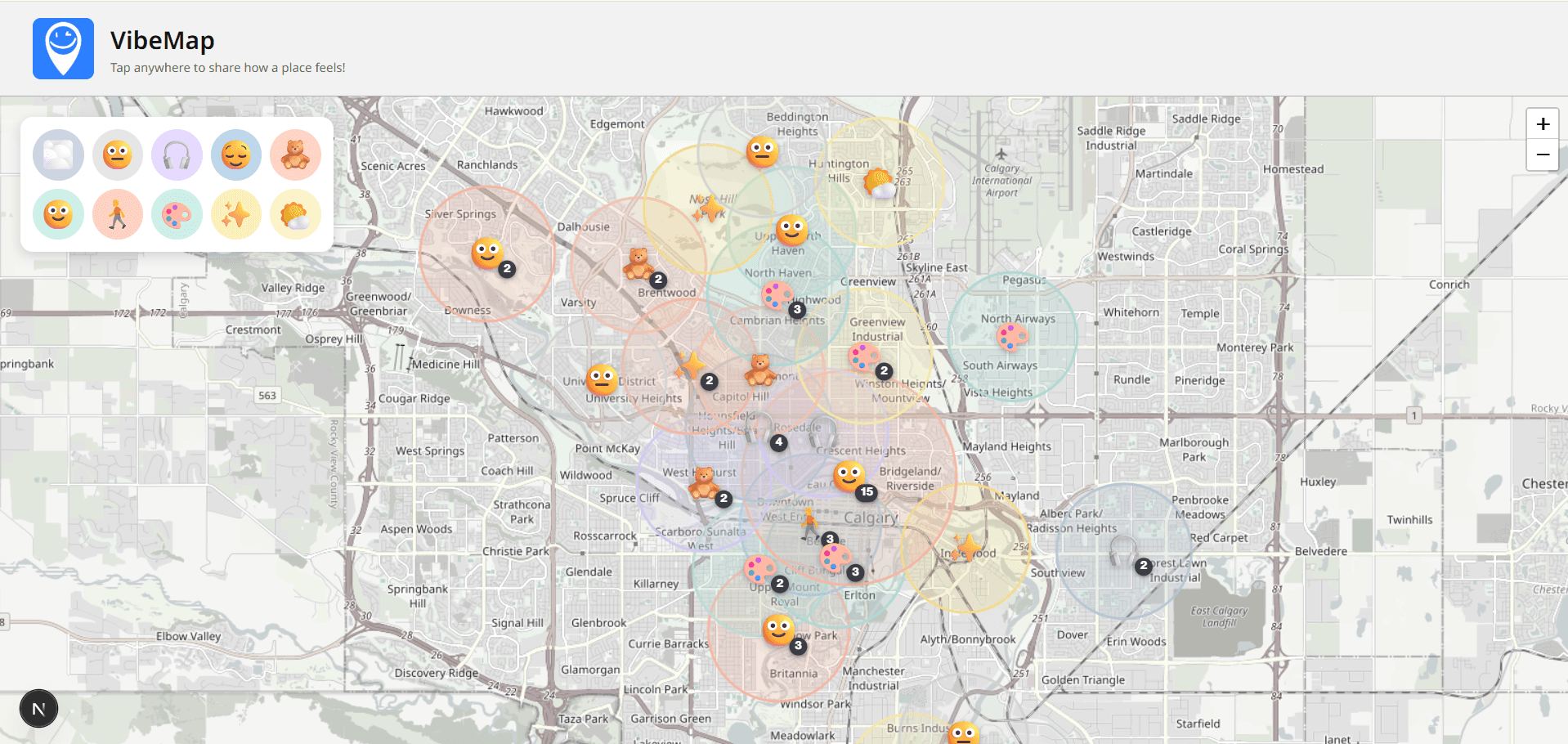
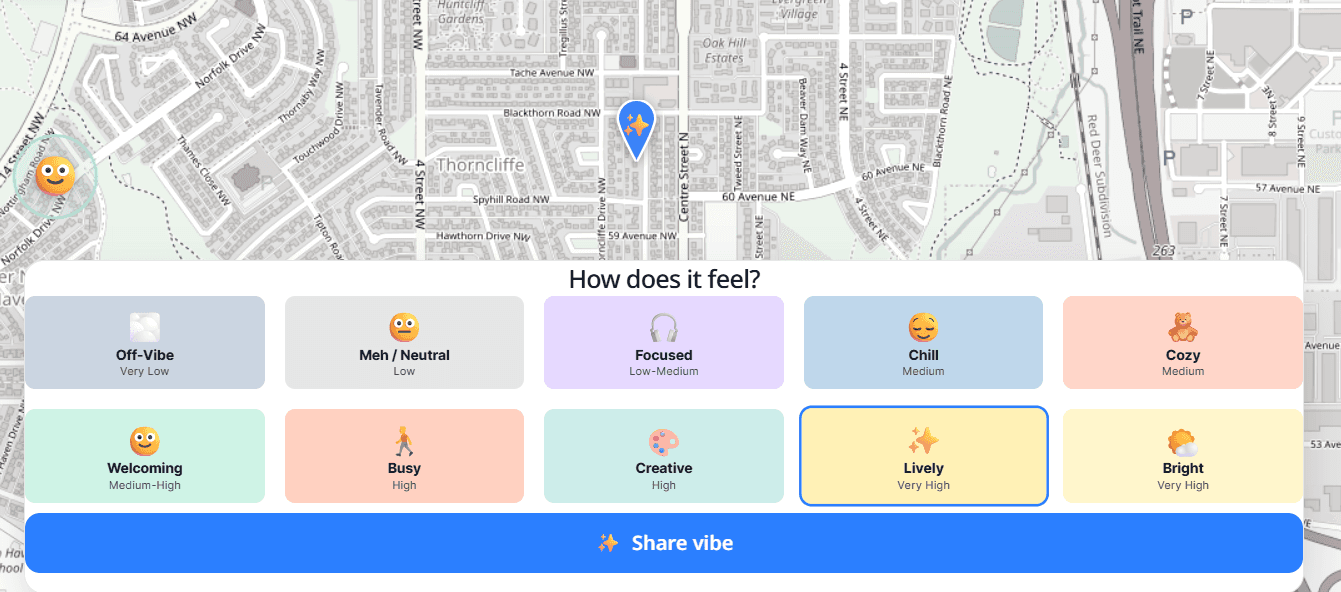
Traditional maps show where things are, but never how spaces feel. People rely on word-of-mouth or personal experience to find places that match their energy, whether it's a quiet study spot or a vibrant social corner.
Existing reporting tools focus on incidents or problems, which can unfairly label neighborhoods or businesses. This negative framing discourages participation and can stigmatize areas based on isolated events.
Communities and urban planners lack tools to understand the emotional dynamics of public spaces in a way that is ethical, aggregated, and privacy-preserving.